Showing posts with label compost. Show all posts

Saturday, April 20, 2013

Organic Gardening in Florida Poses Unique Challenges

Organic Methods for Vegetable Gardening in FloridaOrganic Methods for Vegetable Gardening in Florida by Ginny Stibolt
My rating: 4 of 5 stars

Florida offers gardeners unique challenges and benefits that are not generally addressed in most gardening publications. I find myself always doing a little mental math when I read about when and how to start seeds. I live in North Florida (zone 9B), and I pretty much have to plant spring crops (like English Peas) in the winter. It’s April right now, and our high temp today is 91 degrees Fahrenheit. All of my greens began bolting in February, and my window for growing cool/cold weather crops is almost too small to get anything grown to maturity. And this is in North Florida! My friends in South Florida can forget about growing a lot of common crops entirely!

I’ve been gardening for about 4 years now, and I really wish that I had discovered this book when I first started. It would have given me a great start; instead I had to learn things the hard way. Four years into it, I’ve figured a lot of the info in this book out already. It has some great information on different organic gardening methods, composting, and bed building. However, I’ve read more detailed information on these topics in other books dedicated to them.

What “Organic Methods for Vegetable Gardening in Florida” gets right is its focus on Florida specific gardening challenges. The book recognizes that Florida is unique in that there are many different growing zones in the state, and what works in North Florida will not necessarily work in Central or South Florida. It also addresses Florida’s poor soils and what can be done to amend them.

There is a large section of the book that describes Florida tolerant crops and where they grow best in the state. This section is worth the total price of the book. It is a fantastic reference for anyone gardening in the state. I can look up parsnips or peas and find out how well they grow in each section of the state, when to plant them, and how to care for them.

Though I had already read or experienced a lot of the information provided in this book, the vegetable references have earned it a place in my personal library. If you garden in Florida, this book will have valuable information for you, even if you are a skilled and experienced gardener.


View all my reviews

Friday, April 19, 2013

Fungus Among Us! Part 1– Medicinal Mushrooms

This is a second post based on classes I took at the Organic Growers School (OGS) Conference in March of this year. Two of the best classes I attended this year were Medicinal Mushrooms  and Shroomin’ Off The Grid, both taught by mushroom evangelist, Tradd Cotter. Cotter owns and operates Mushroom Mountain in South Carolina, and has made a name for himself with his work on mycoremediation and spore cultivation. If you have questions about mushrooms, this is the guy to ask!

So first I’d like to address medicinal mushrooms. Cotter’s lecture on this subject was fast and furious. He probably condensed a 3 hour lecture into an hour. There was more information than I could even absorb.

According to Cotter, many mushrooms contain antibiotic, anti-pathogenic, and some even seem to protect against cancers! For instance*:

Chanterelles – contain a cancer-fighting enzyme, are high in beta carotene and vitamin D if grown exposed to light for a couple of hours a day.


Cordyceps mushrooms – are an immune system stimulant that is frequently given to people undergoing surgery.These mushrooms are also carnivorous! They attack and eat insect pupae and the mushrooms frequently sprout out of the back of the pupae’s head. Gnarly! Some of these mushrooms can be used to kill fire ants, squash bugs, aphids, etc. Think of the gardener’s who could use this fungus! Cordyceps Ophioglossoides has been shown to stimulate adult brain cells to grow. It is being researched on its ability to reverse brain diseases like Alzheimer's.

Lion’s Mane (Hericium Erinaceus) – cook this mushroom to release a nerve tonic


Psilocybin (Magic Mushrooms) – are currently being studied at Johns Hopkins as a treatment for addiction and PTSD. Preliminary studies has shown great promise with just one dose!


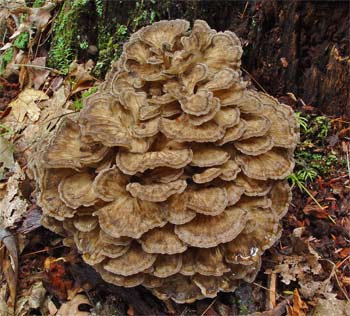
Maitake – Makes a great tea and has anti-cancer properties.


Chicken of the Woods – kills e-coli bacteria and is a great treatment for fungal infections.


Wood Ear – (commonly used in hot and sour soups) These mushrooms dehydrate down to a fraction of their original size, but rehydrate almost completely. These mushrooms store well and are high in anti-coagulants.


Enoki (Velvet Foot) – is very high in anti-cancer properties.


Almond Portobello – tastes like toasted almonds when cooked and is high in anti-cancer properties.


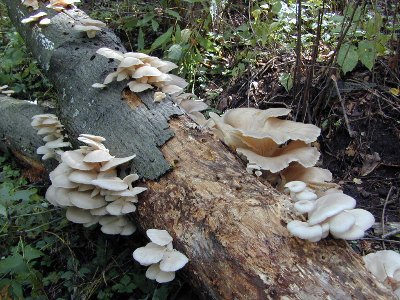
Pleurotus (Oyster) – has twice the protein of eggs, is high in psyllium, is anti-viral and anti-parasite.


Corn Smut – a corn fungal pathogen that tends to grow on Silver Queen and other heirloom varietals. This fungus tastes like a corny guacamole and can help with uterine contraction.


Turkey Tail – dried and powdered has been studied in its use to fight breast cancer. Seems to work as a preventative as well.


Reishi (Ling Chi) – is known as the Mushroom of Immortality. If this mushroom is grown in light, it is more medicinal. This amazing mushroom is adaptogenic, immune enhancing/modulating, and has ganoderic acid (for diabetics). Cotter made us some reishi mushroom tea to try and it had a pleasant earthy/chocolate flavor. This medicinal can be dried and powered or extracted.

Cotter recommends reading The Fungal Pharmacy by Robert Rogers for more information on medicinal mushrooms. If you are interested in growing your own medicinal mushrooms, check out my next posting on Shroomin’  Off The Grid!

* This information is not intended as medical advice. Do not ingest any mushrooms without assurance from a mycologist that they are safe to eat.


Friday, April 12, 2013

Lasagna Gardening

Lasagna Gardening: A New Layering System for Bountiful Gardens: No Digging, No Tilling, No Weeding, No Kidding!Lasagna Gardening: A New Layering System for Bountiful Gardens: No Digging, No Tilling, No Weeding, No Kidding! by Patricia Lanza
My rating: 5 of 5 stars

I found Patricia Lanza’s “Lasagna Gardening” to be highly inspirational. This is a gardening method that anyone can try. It is basically sheet composting inside of a garden bed, but instead of waiting for the compost to be fully processed, you can plant inside a lasagna garden as soon as it is built.

One of the keys to lasagna gardening is using the organic materials that you have on hand. I have a lot of oak leaves, grass clippings and garden waste on hand, so that is what I will be using to build my lasagna beds. Though the oak leaves can make the soil highly acidic, I’ll temper that with a dusting of wood ash that I saved from my winter fires.

There are only two things that I found as drawbacks to this book. The first is Lanza’s dependence on using large quantities of Sphagnum moss. This is a product that takes hundreds of years to grow back, so it is practically unsustainable. I do not want to use Sphagnum in my gardens at all. I am going to find an alternative to the moss that is a renewable resource. I am considering using a combination of Spanish moss (which I have tons of in my yard) and coconut coir. I’ve used the coir in the past as part of a potting mix. It holds water similarly to the Sphagnum moss and it is highly renewable, so I think that’s a good alternative.

The second is her recommendation of hybrid plants. I don’t have a moral argument against using hybrids, but you can’t save seed from hybrid plants, so you can’t build a series of garden plants that are adapted perfectly to your garden if you are using hybrids. It’s a small complaint, but I would have appreciated more recommendations of heirloom varieties.

Other than that, this book is very thorough. Whether you want to grow vegetables, herbs, flowers, or even start a container garden, Lanza has you covered in this book. She lays out the simple steps to building a lasagna garden bed, and then goes into how to care for different kinds of plants in the new bed(s). The method is so simple and low-cost, you will want to start a new bed right away. Regardless of which zone you live in, or what you want to grow, get Patricia Lanza’s “Lasagna Gardening” book. It will educate and inspire you.


View all my reviews

Monday, April 8, 2013

Composting: Not Just For Kitchen Scraps!

The Complete Compost Gardening GuideThe Complete Compost Gardening Guide by Barbara Pleasant
My rating: 5 of 5 stars

This is the only book on composting you will ever need. It discusses many different composting methods, style, and tools, and it ends on uses, cover crops, and green mulching. It uses the real, personal experiences of the authors, fantastic step-by-step photos and diagrams, and some great recipes and info graphics.

I got a lot of new ideas and plans from this book, and I can't wait to get started on my new composting projects. I checked this book out of the library, but it is such a fantastic resource, that I will soon be purchasing my own copy.

View all my reviews

Saturday, April 6, 2013

Turmeric Time!

One of the fantastic classes available at the Organic Growers School (OGS) this year was on growing turmeric. I wasn’t able to attend this class, but my neighbor did, and she was greatly inspired by it. Turmeric is very medicinal, and it is starting to be recognized for its many health benefits. Here’s an info graphic that only touches on some of the amazing qualities of turmeric.

turmeric chart

My neighbor and I have been talking about growing our own medicinal gardens for a while now, and this turmeric class clinched it. It was just too great a plant to ignore.
Turmeric is a temperamental, tropical plant that hates the cold. Luckily, we live in Florida and our weather is perfect for growing this root. We ordered some organic turmeric root rhizomes (see www.eastbranchginger.com), organic coconut coir for a growing medium, and black plastic 5 gallon grow bags.

2 pounds of Turmeric rhizomes

The coir comes in 5kg compressed blocks. After rehydrating the blocks, the damp coconut coir filled my wheelbarrow. We added a couple of gallons of our home grown organic compost and some gypsum pellets.

Coconut coir & compost media

Once we had our growing medium well mixed, we filled our grow bags. Turmeric needs about 10 inches of soil below the rhizomes. I filled the bags and measured to make sure that each was at least 10 inches deep.

Turmeric grow bags

Then we placed 3 turmeric rhizomes in each bag. That is probably one more rhizome than is best for the size of our bags, but we are not sure that all of the rhizomes will sprout. We simply placed the rhizomes on top of the growing medium.

rhizomes in pot

Then we sprinkled less than an inch more growing medium over the rhizomes. Now we wait. It takes about three weeks for the rhizomes to sprout, and about nine months for turmeric root to be ready for harvest. We are hoping to turn our four pounds of rhizomes to 40 pounds of commercially viable turmeric root in late December/early January. I’ll keep you all posted on my crop’s progress.


Friday, March 29, 2013

Neonicotinoids

Would you eat a vegetable that you knew contained poison? It had been bred to kill. Would you serve it in your dinner salad?

Regardless of your answer, the sad truth is, you probably already have. Farmers are now using a poison derived from nicotine, neonicotinoids, to kill pests. But this is not a spray or a powder that is administered topically to the plant. Instead, this is a systemic pesticide that is bred into the plant. The farmers buy this genetically modified seed, because it saves them money on purchasing and applying topical pesticides. The neonicontinoids have a long life span, easily months long, but as we’ve seen with herbicides like Grazon, it could persist in compost for years. The idea behind using this new form of pesticide is that it can’t wash off in the rain, or degrade in the sun. It is there, within the living plant. And when an insect comes along for a snack, they’ll find their food has been poisoned, and they will die.

So I can see why farmers would find this new form of pesticide beneficial. What I don’t understand, is why anyone that wants to eat fresh food would allow it to exist. If this poison kills insects when they eat it, what is it doing to us when we eat it? Apparently, this question never occurred to the EPA, who granted some neonicotinoids conditional approval without extensive research or testing. A group of beekeepers, environmentalists, and consumer groups recently sued the EPA for this decision, saying the association exceeded it’s authority.

But speaking of beekeepers brings me to the second prong of how these embedded pesticides could end up drastically reducing our supply of safe food. It turns out that Colony Collapse Disorder is not even close to being treated or healed. Beekeepers are reporting the greatest bee die offs ever over the course of the last 12 months. Many are blaming the toxic soup of herbicides, pesticides and fungicides that are now our nation’s farms. And neonicotinoids are a major culprit to bee deaths.
The pollen on these GMO plants are full of poison. Bees are bringing this poisonous pollen back to the hive and making toxic honey from it. Over the course of the year, especially in the cold months, bees and bee larva eat this toxic honey and it kills them. They are dying by the billions. Many of the top bee keepers in the country are experiencing hive deaths of over fifty percent. If we kill off all of our bees with our poisonous produce, we won’t have to worry about how much pesticides are in our vegetables because we won’t have any vegetables. Without bees to pollenate our plants, our crops will not be able to fruit.

Everyone wants to talk about the costs of farming and food production these days. Everything from the weather, to the seed, to the pests, to the availability of migrant labor affect the cost of our food. Everywhere we turn, we are being told why the price of our produce is going up. But no one is talking about the real price of growing poisoned food. The price per pound is important, but it pales in comparison to the expenses incurred by not having any produce to sell. Perhaps we should all consider a compromise with the insects. We’ll tolerate some pests if the bees will come back and help us grow healthy, non-toxic food.

For more information on this topic, Google “neonicotinoids” and read this article from the New York Times, http://www.nytimes.com/2013/03/29/science/earth/soaring-bee-deaths-in-2012-sound-alarm-on-malady.html?pagewanted=2&_r=2&hp.


Thursday, February 28, 2013

My Garden’s Been Poisoned!

No joke, my garden has been poisoned. And as far as I can tell, I have Dow Chemical to ultimately blame.

I live in Florida and our ground is just sand. I have to amend and create my own garden soil. So I compost, add fish emollient, and pick up loads of horse manure from a local farm.

A couple of months ago, my neighbors and I got a load of manure from the horse farm to use in our spring beds. We have been doing this for years with great success. We pick up a trailer load of partially composted horse manure, bring it home, finish composting it, and then use it as the soil in our garden beds. Well, the manure has been composted, and we began filling our beds with it.

I used the new compost in a bed that currently is half full of greens. I spread the compost in the empty half of the bed and direct sowed Wando Peas, broccoli, and carrots. The peas came up first and looked a little weak, but it’s been cold and dry, so I chalked it up to that. The broccoli came up and looked good. The carrots never even sprouted. As the peas grew, it became obvious that something more than dry weather was the problem.

Herbicide Poisoned Pea Plants

At that same time, my Feb/March issue of Mother Earth News arrived. In it was an article called, “Killer Compost Update: Herbicide Damage Still a Major Problem.” The picture that was displayed with the article caught my attention because it looked just like my peas.

022813 burned pea plant 3

The article explains that two Dow AgroSciences herbicides (picloram and clopyralid) are being found in composts and animal feeds. My heart sank. I had the terrible suspicion that my new compost was contaminated.

I called my neighbor to see if she had used the new compost yet, and if so, what her results were. She walked me over to her bed of English Peas. They were all dead or burned and wilted. We had become the victims of Killer Compost.

The horse farm does not use herbicides themselves, so they were introduced either through the hay or through the Purina horse feed. Either way, our ton of compost is toxic and we have no way of knowing if any alternative sources of manure will be herbicide-free. If the herbicide was introduced through the Purina feed (as Mother Earth explains is a very good possibility) we will have to find an organic farm that feeds only organic grains, grasses, and hays.

There is no remediation for picloram or clopyralid once it has been introduced. It will remain active in the soil for years. My neighbor and I have to dig up our beds and remove all of the toxic compost. What we do with it then is up for debate. It survives digestion and hot composting, so there doesn’t’ seem to be any way to break it down. We will either spread it on walkways or burn it.

Mother Earth is calling for these persistent herbicides to be outlawed entirely before it becomes impossible to grow organically. Please join their fight with me. Write to Richard Keigwin, director of the EPA’s Special Review and Reregistration Division at keigwin.richard@epa.gov to let him know about your concerns.


Saturday, March 3, 2012

Garden Bed planted March 1st

It’s felt like the last 30 or 40 days have sped by in fast forward motion. Spring sprung and hightailed it toward summer before I even had all of my seeds started. I’m not sure what this unusually warm and dry weather will mean for my garden in the high summer months of July and August, but for right now it means I have had to speed up my efforts to get the garden growing.

In late February Max built me a raised bed and I dug it out, weeded, and laid some cardboard down to inhibit weed growth.

Cardboard bottom layer of bed 1

Then I filled the bed with tons of composted cow manure.

layer of cow manure on bed 1

On top of the cow manure I added some locally-sourced, composted horse manure. The horse manure helps to keep the soil moist in addition to adding some great fertilizer to the mix.

Bed 1 filled w.manure

Once that was all complete, I was ready to plant my most advanced seedlings. From the top of the above picture to the bottom, I planted rows of Cherokee Purple tomatoes, Dragon Tongue beans, Shallots, Sweet Yellow Onions, Purple Tomatillos, and Green Cowhorn and Burgundy Okra.

These seedlings took off immediately upon being planted in the bed. I had blossoms on my dragon tongue beans only days after getting them in the raised bed.

Blossoming Dragon Tongue Beans

This first bed took off so well, we’ve decided that we need a second one to build for more beans, peppers, eggplant, etc. I’ll have a post up soon about the next bed.

Tuesday, February 28, 2012

Worms Will Be Eating My Garbage

I checked "Worms Eat My Garbage" by Mary Appelhof out of the library so that I could prepare for starting my own worm farm. I am expanding my gardens this year, and with Florida's sandy soil, I need to find ways to supplement it. I've read that vermicomposting is a great way to produce nutrition for a garden, and that Mary Appelhof is the #1 expert on the subject.

This book could definitely use an update. It was written in 1982, before worm farms were commercially produced, before the internet, and at the start of interest in the US in recycling. I would love to see the resources section updated for the present times, and I would like to know Ms. Appelhof's opinions on the new commercially produced worm bins.

That being said, I still learned a lot from this little book. Appelhof's information on worm ecology, biology, and care is detailed and easy to understand. Her section on the other critters that are likely to live in your worm bin was also very informative.

Thanks to "Worms Eat My Garbage" I feel fully prepared for the arrival of my Worm Factory 360 and my 1800 Red Wigglers.